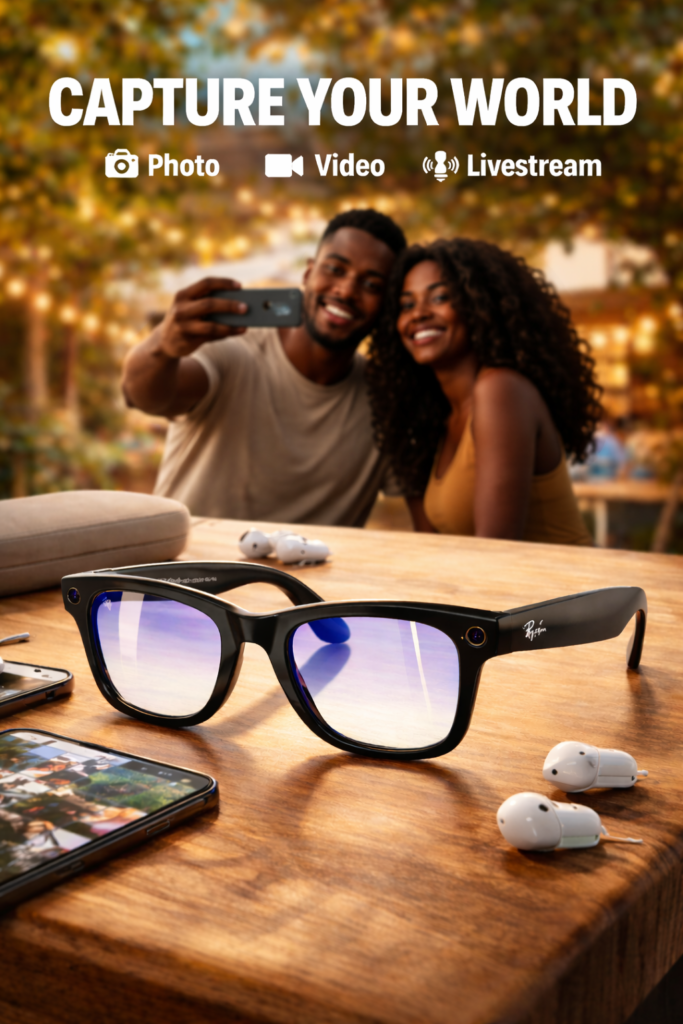

Product Review: Meta Glasses
I Have Been Wearing Meta Wayfarer Smart Glasses for Months — Here’s My Honest Take First-gen smart glasses with prescription lenses, embedded speakers, AI, and a camera that actually fits your life. Game….Changer I’ll be upfront with you: I was skeptical. So much so I waited for the second gen to release to buy the first gen on sale. Smart glasses have been a tech category that promised a lot and delivered mostly awkward stares and empty pockets. Who knows more than me? I was a part of the infant stages of a startup transitioning to this technology. But when Meta released its second-generation Wayfarer smart glasses, something made me want to give them a real shot — the discount on the first gen made it a no-brainer. I had to test it out. Months later, I can tell you: they’ve genuinely surprised me. Here’s the full breakdown. Style That Doesn’t Scream ‘Tech Nerd’ The first thing most people notice about smart glasses is whether they look ridiculous. The Wayfarer design sidesteps that entirely. The classic Ray-Ban frame shape is timeless — and that’s by design. These don’t announce themselves as gadgets. They just look like quality eyewear. I went one step further and had my prescription lenses installed with transition lenses, so the glasses work full-time for me — not just as a tech accessory, but as my everyday eyewear. That decision paid off big. Since they’re already on my face all day, I actually use every feature. The barrier to entry drops to zero when you’re already wearing them. If you wear prescription glasses, getting your lenses added is hands-down one of the smartest ways to maximize this product. All-Day Comfort — And I Mean All Day Comfort was a legitimate concern going in. Smart glasses carry more weight than standard frames — there’s hardware in these arms. But Meta has done solid engineering work here. After the first day or two of adjustment, I genuinely forget I’m wearing them. Long meetings, long drives, evening walks — they hold up. No sore nose, no ear fatigue. For a wearable, that’s the most important test, and the Wayfarer passes it. The Embedded Speakers Changed How I Consume Content I’ll lead with my favorite feature because it genuinely caught me off guard: the embedded speakers in the frame. These have become my go-to for listening to content on my phone — podcasts, music, audiobooks, YouTube videos. The audio is open-air, meaning it’s not noise-canceling and others nearby can faintly hear it, so you stay spatially aware of your surroundings. But the sound quality is better than I expected, and the convenience is unmatched. Think about your daily routine — commuting, cooking, walking the dog, working out, sitting on the porch. In every one of those moments, you can have audio playing without reaching for earbuds, without fighting with tangled cords, without losing situational awareness. It just works, hands-free, naturally. I didn’t expect this feature to become a lifestyle shift. It has. Capturing Moments Without Missing Them The built-in camera is genuinely useful for capturing first-person perspective photos and videos. I’ve used it to capture candid family moments, scenic views during walks, and quick video clips — all without pulling out my phone and shifting into “recording mode.” The image quality is respectable — not flagship smartphone territory, but solid enough for social sharing and memory-capturing. The key advantage is perspective: you’re capturing life from eye-level, exactly as you see it, and you’re still present in the moment while doing it. Note: there’s a visible LED indicator that lights up when recording, which addresses the privacy concerns you might have — both for yourself and for those around you. Meta AI: A Surprisingly Capable Assistant The ability to ask Meta AI questions hands-free is one of those features you don’t realize you’ll use until you start using it constantly. Need a quick fact while your hands are full? Want to set a reminder, check the weather, or get a recipe while cooking? Just ask. The Meta AI app rounds out the experience nicely. The creative AI tools — image generation, writing assistance, and more — are genuinely good and continue to improve. It’s a full-featured AI assistant, not a gimmick bolted onto a wearable. As someone who relies heavily on AI tools throughout the day, having access to a capable assistant without touching my phone has been a real productivity and convenience win. Battery Life: The One Catch The only real negative I can give the Meta Wayfarer is battery life. On a good day with moderate use, expect around 3–4 hours — which won’t get most people through a full day. However, Meta softens this blow in two ways: the charging case holds enough charge for several top-offs when fully loaded, and the glasses charge back up quickly. So while the battery life itself is a limitation, the case and fast charging make it manageable in practice. Final Verdict: Worth It — Especially If You Wear Glasses The Meta Wayfarer Gen 1 glasses are the first smart glasses I’ve used that genuinely earned a place in my everyday life. They aren’t perfect — the camera resolution won’t replace your smartphone, and audio is open-air by design. But the combination of great form factor, all-day comfort, embedded speakers, AI access, and camera capability adds up to something meaningfully useful. Here’s what I’d tell anyone considering them: If you already wear glasses, get your prescription added. It changes everything. The speakers alone justify the purchase depending on how you consume audio content daily. The AI features are practical, not performative — they genuinely save time and help. They look good. That matters. You’ll actually wear them. Smart glasses have been a category waiting for a product to make the case. For me, the Meta Wayfarer made it. Purchased personally. No sponsorship or affiliation with Meta.
Product Review: Meta Glasses Read More »